
Circle4Change
Circle4Change aims to become a large, multi-year European social landscape artwork that connects and inspires, with a focus on being a good ancestor and promoting long-term thinking, working toward a symbiotic world in harmony with the Earth. Circle4Change draws a circular line through nine European countries, with Leeuwarden (NL) and Nova Gorica (SI-IT) as its two poles (Cultural Capitals in 2018 and 2025). The circular line passes through the Netherlands, Germany, Poland, Czechia, Austria, Slovenia, Italy, France, and Belgium.
The line will become a magnet for initiatives that demonstrate how important and enjoyable it is to enrich the Earth rather than burden it. Together with local community groups, organizations, artists, municipalities, and businesses, we will empower the circular line with activities and projects of imagination, hope, and change. The magical circular line will become a platform and laboratory for renewal and connection. A Gesamtkunstwerk that envisions the Symbiocene, celebrates the richness of diversity, and will also evolve into a contemporary long-distance walking and cycling route with a positive message.
Every three years, we will spotlight the circular line with a circle-encompassing event. In April 2025, we will begin with an initial activity: ‘A Tree Cycles Through Europe.’ Along the 5,000 km route, we will introduce the ‘Birthday Tree’: ‘It’s my birthday, so I plant a tree.’ The first tour in 2025 will be similar to the Olympic torch relay, serving as the announcement and prelude to 2028, when we aim to cycle through Europe with an entire ‘forest.’ Over the coming years, we will plant countless birthday trees with many people, creating numerous birthday forests along the line and collectively building a vast landscape artwork.
Visit the website Circle4Change.eu/en
Beach of Strandeiland – IJburg, Amsterdam
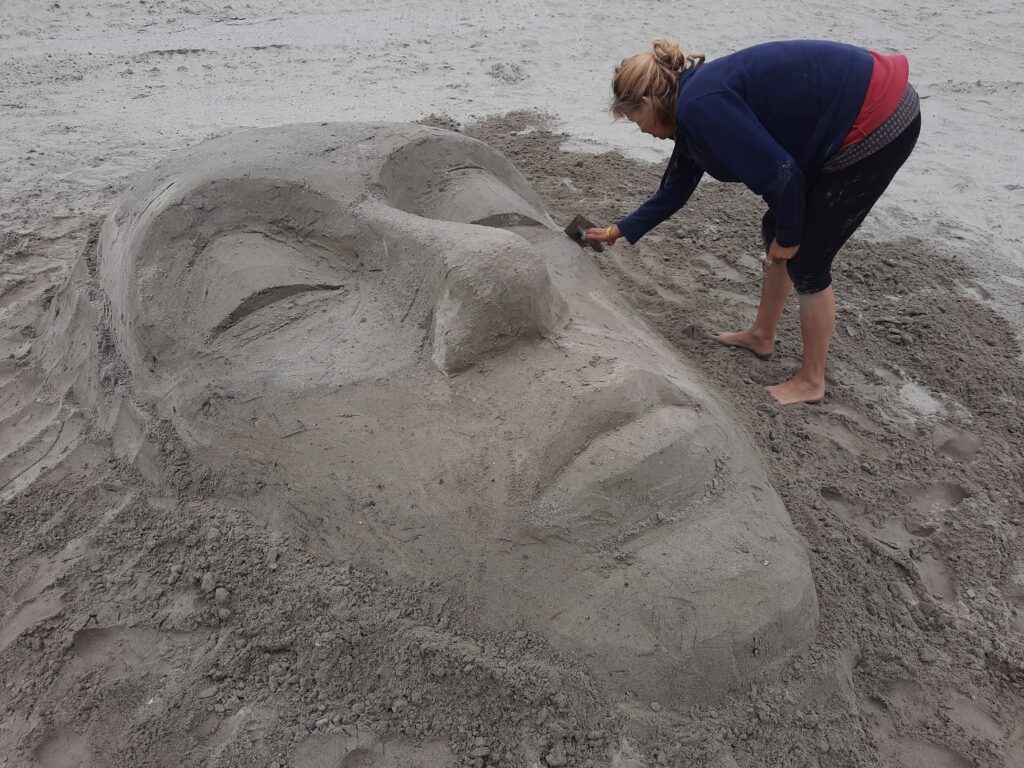
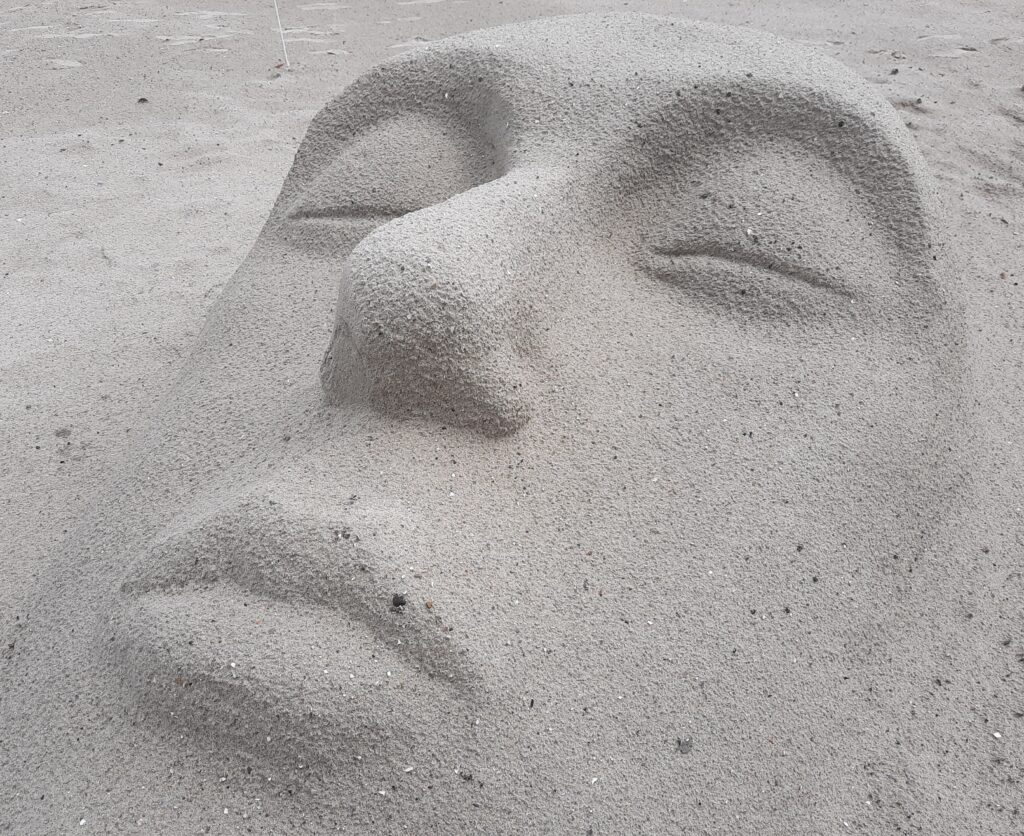
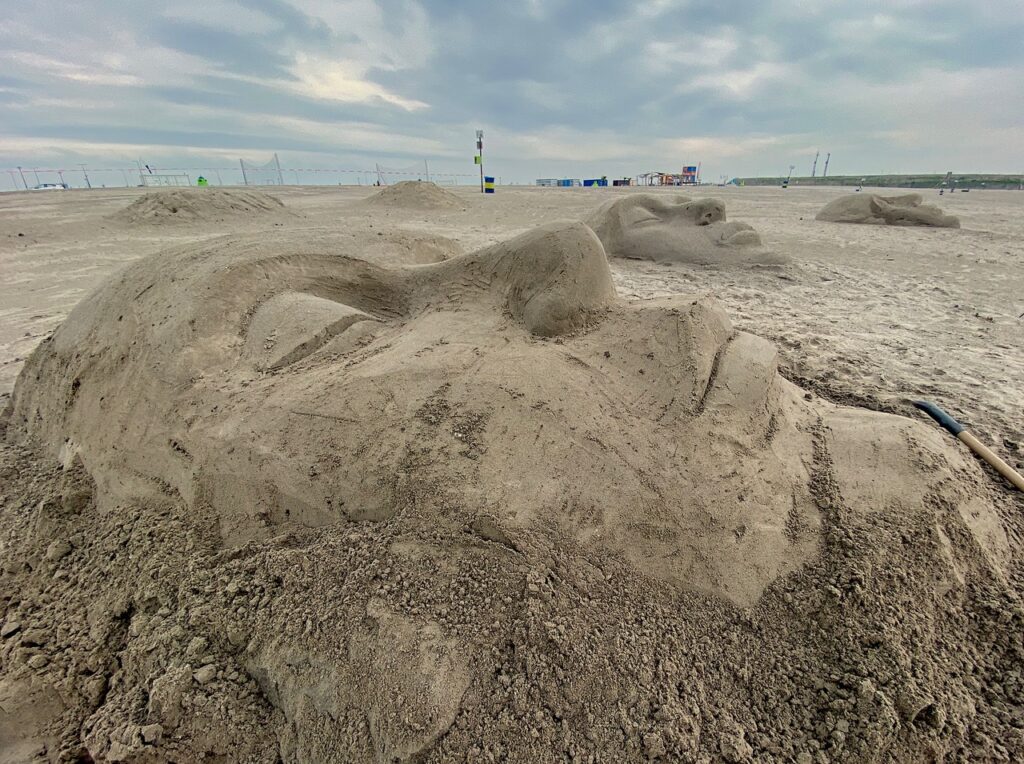
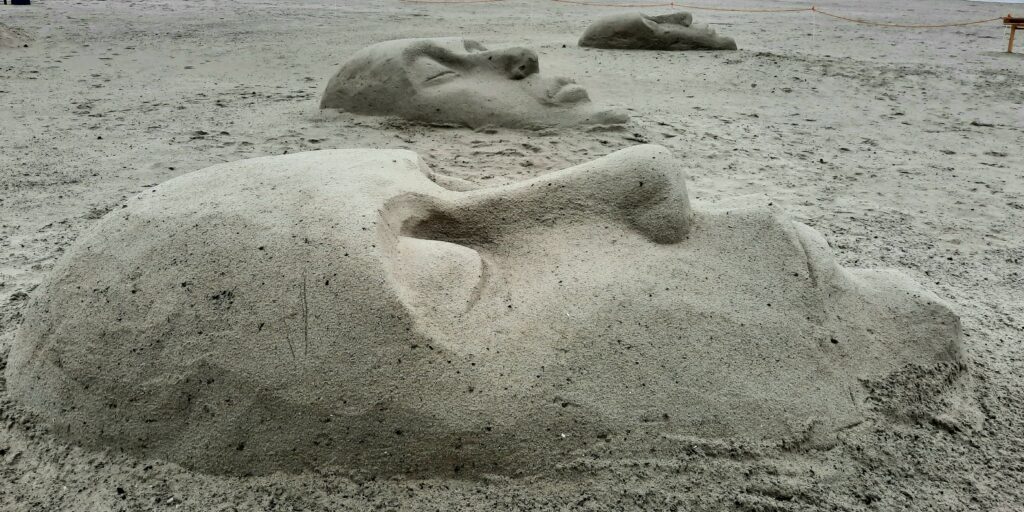
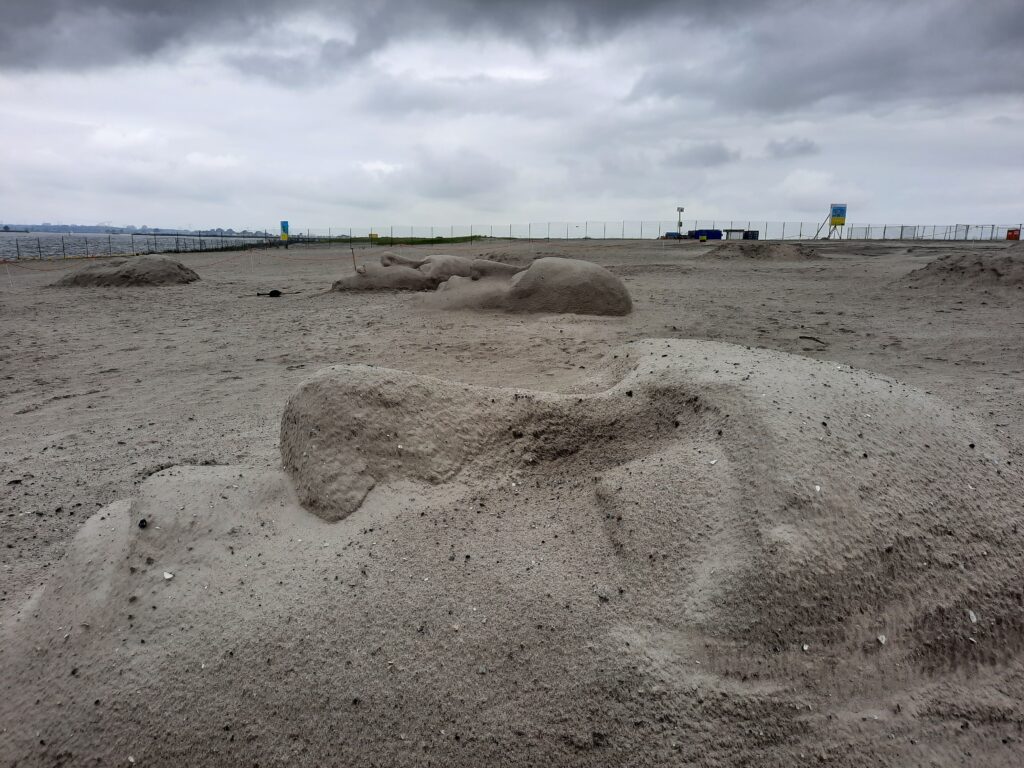
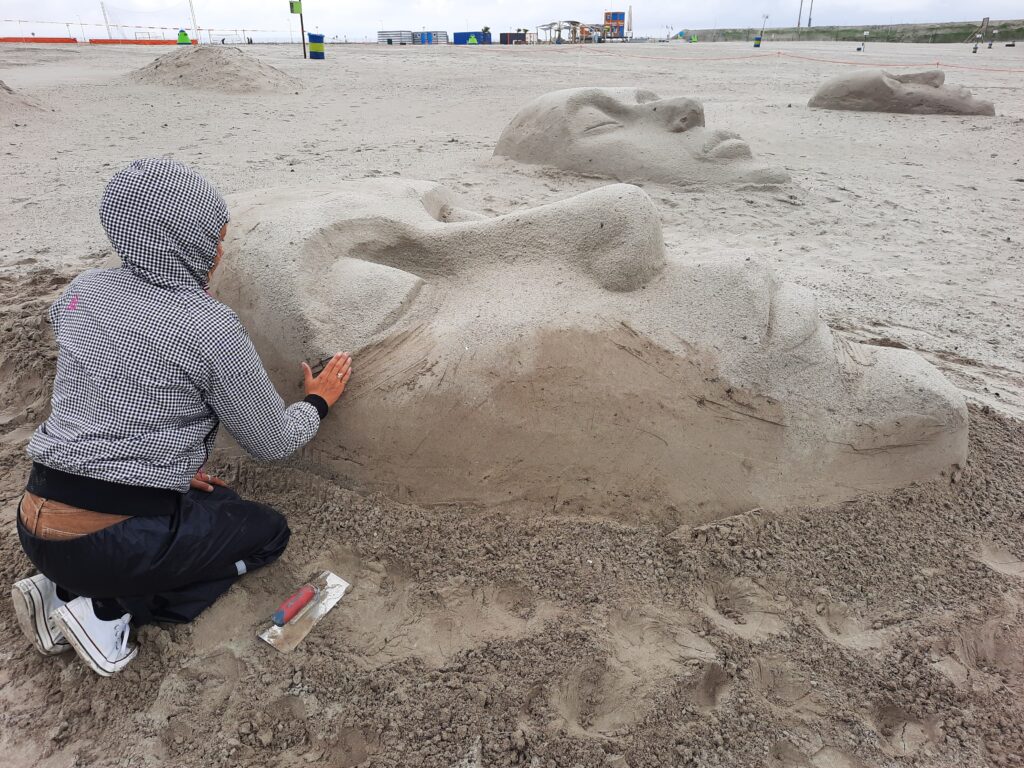
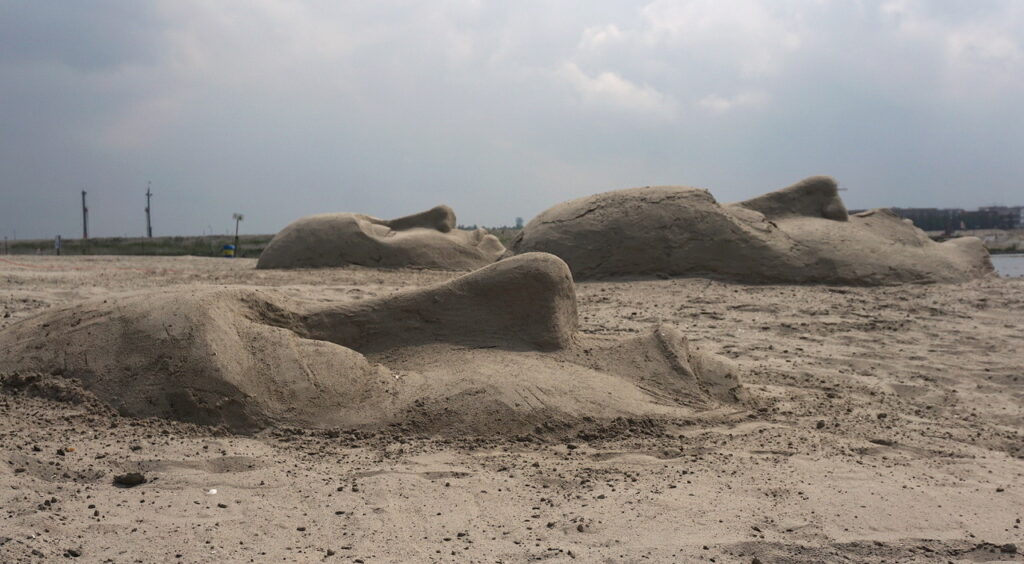
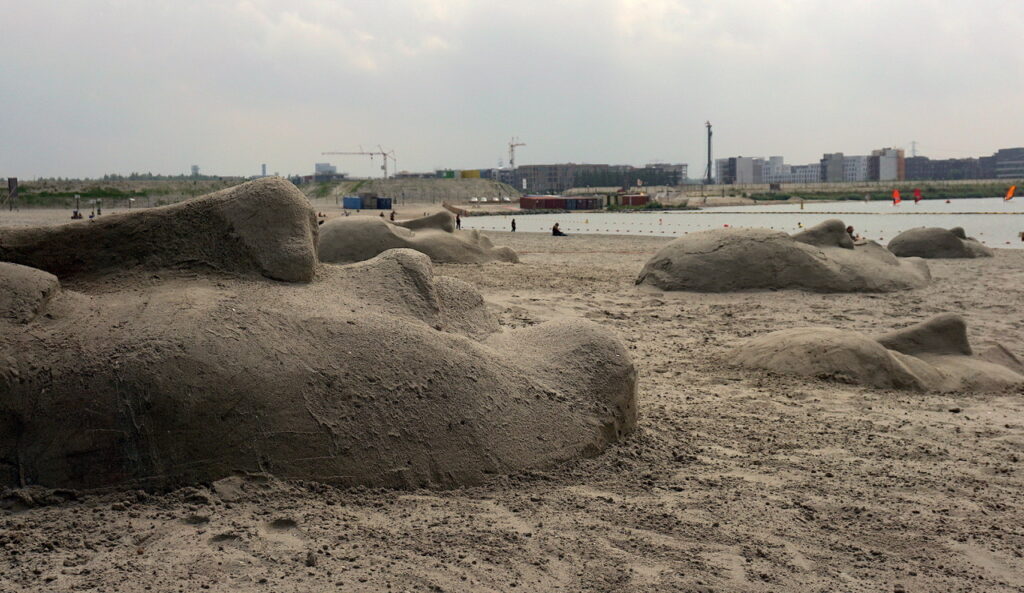
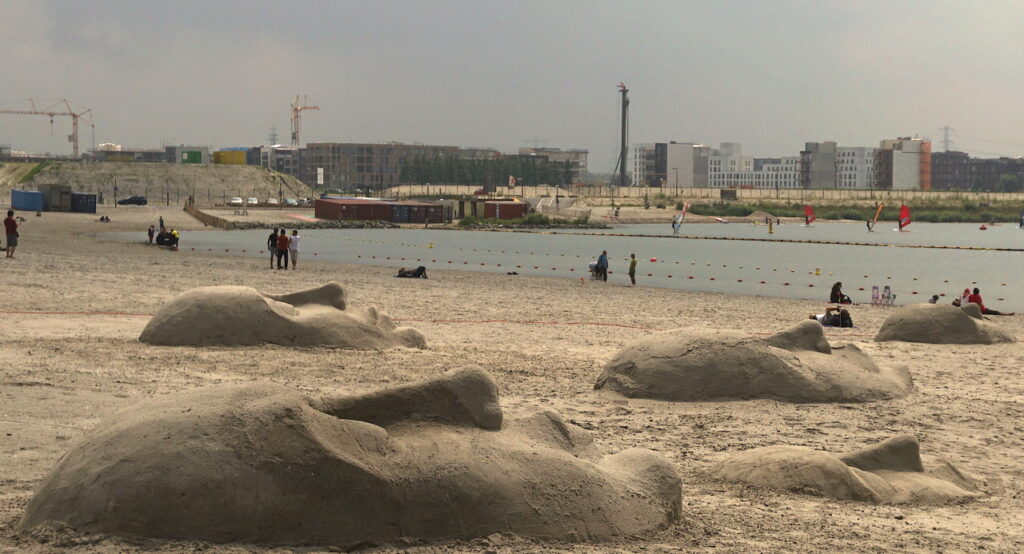
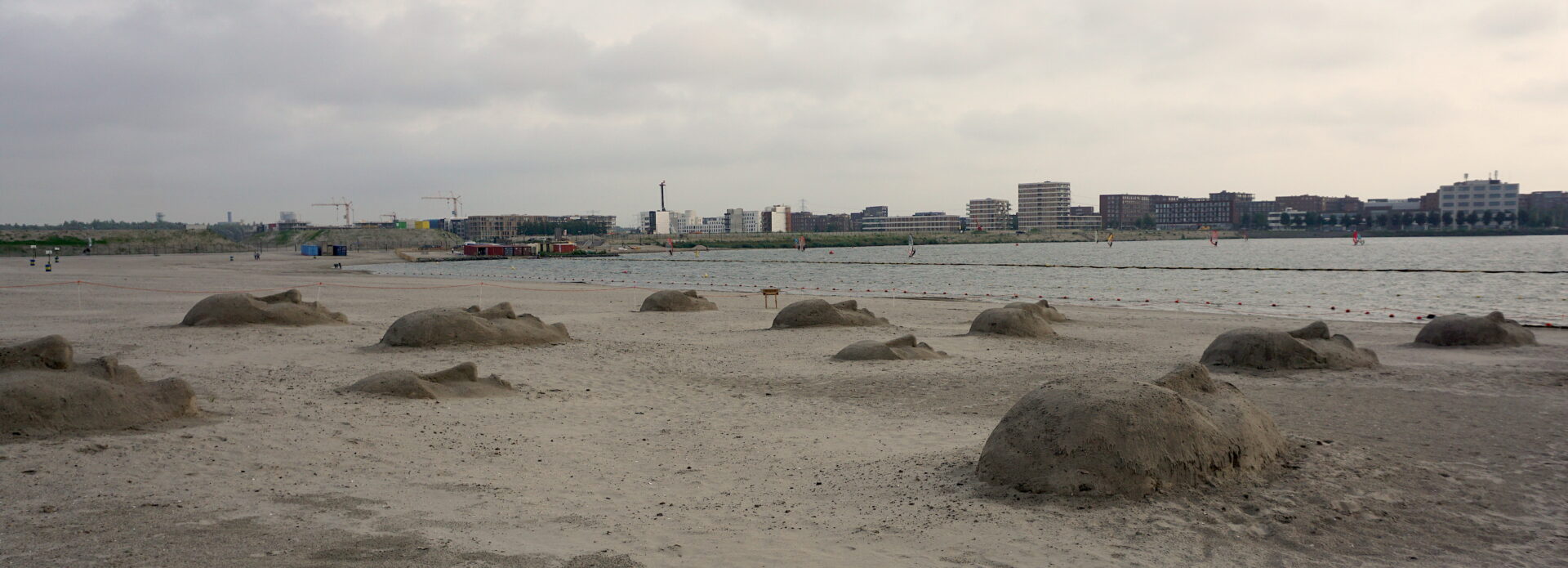
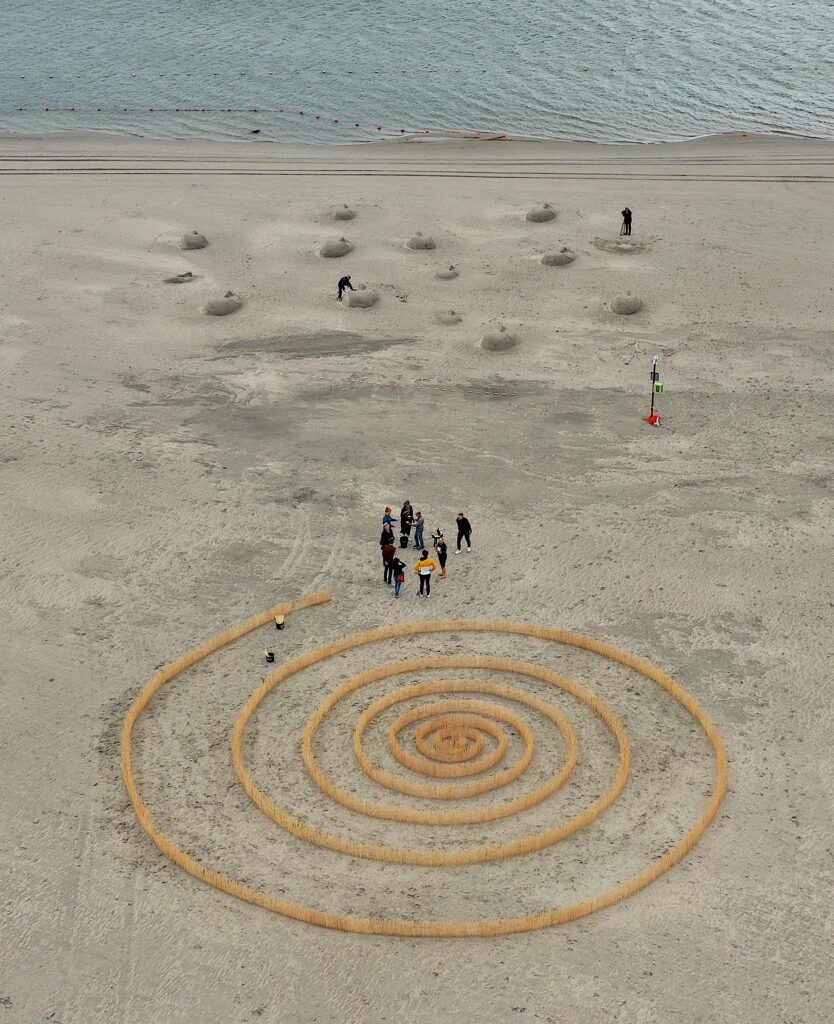
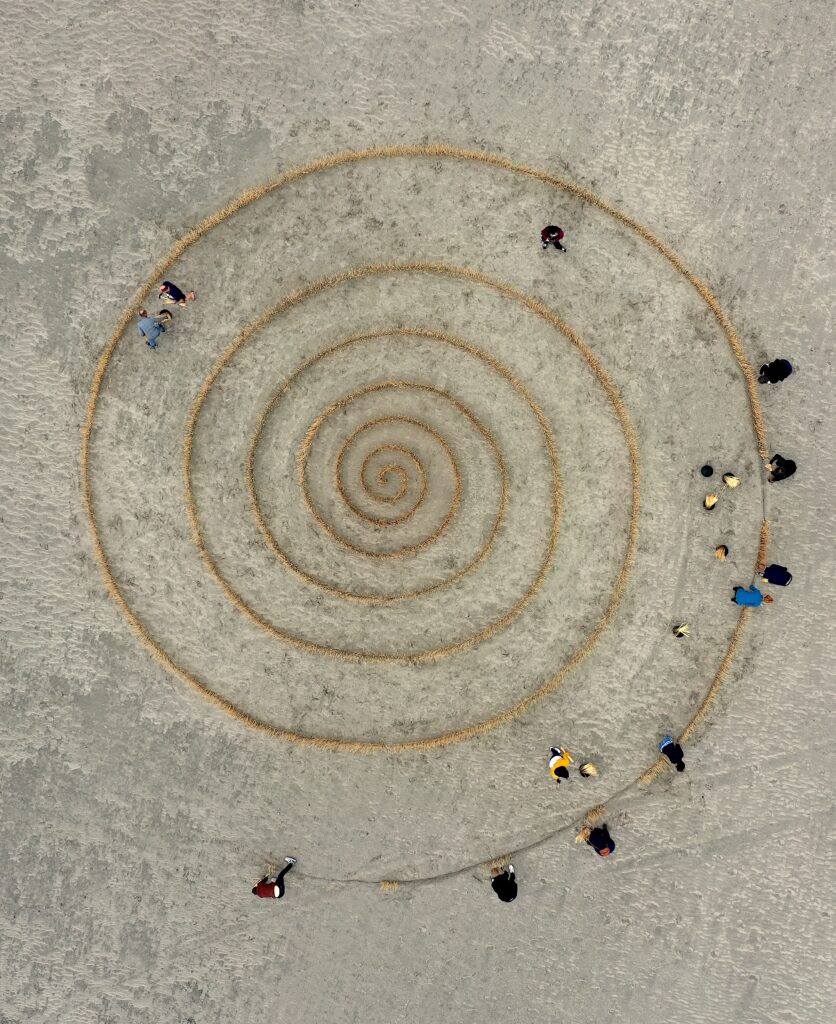
On the new beach of Strandeiland, SLeM presents the art installations ‘Sandscapes’ and ‘Woodlands’.
Sandscapes
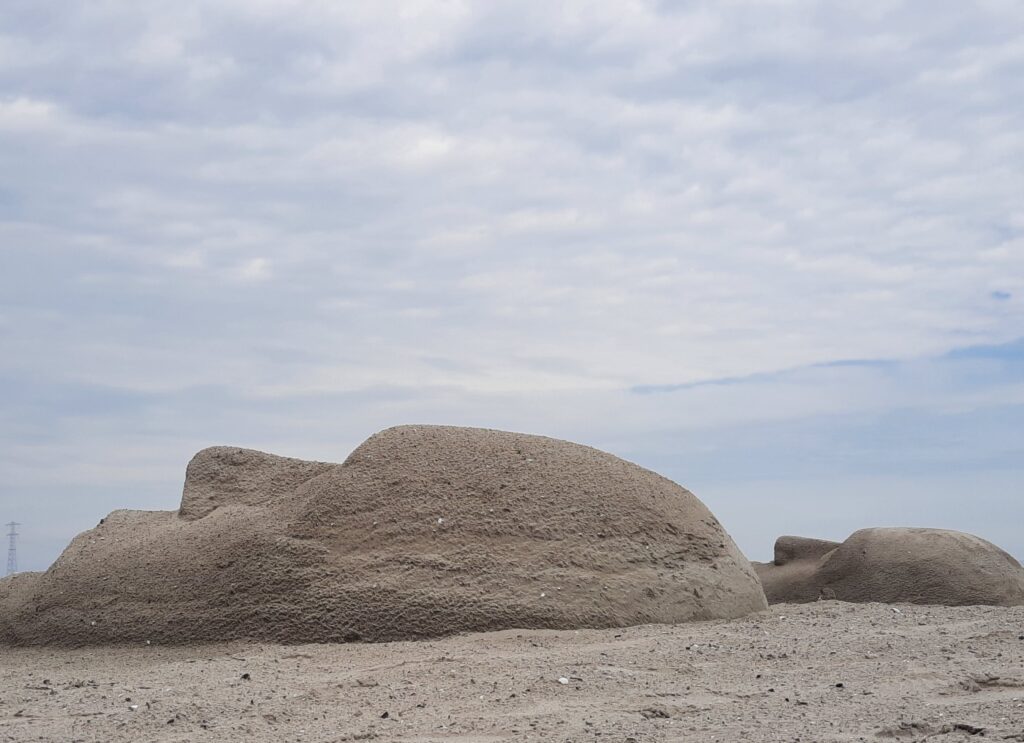
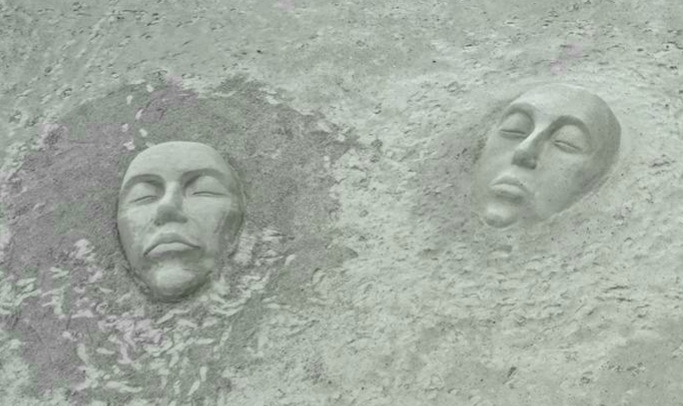
The concept behind the ‘Sandscapes’ made by Italian-Danish artist Rikke Munkholm Laursen is ‘We are Nature’. Sandscapes’ stands for recognition and connection. Everyone and everything is part of the great, wonderful and complex ecosystem of planet Earth. Sandscapes’, developed in cooperation with Bruno Doedens – SLeM, has previously been shown in the Netherlands on Terschelling Island, in Zijpe NH and in Scheveningen. They can be seen at Strandeiland until 16 July 2021. While new ‘Sandscapes’ are being made, the old ones will be blurred by the wind: everything moves, everything changes.
Woodlands
With more than 50,000 split bamboo sticks, we make poetic drawings in the sand. The sticks are planted with the help of volunteers. Every day a new scene, for ten days, in three periods. Together, the ten scenes represent the essay ‘Planet Paradise’ by Bruno Doedens. He claims that new stories help us to reinvent ourselves and encourage us to become a ‘clean species’ again. See www.planetparadise.nl
Rings by the Sea
Scheveningen-The Hague | 2018
Scheveningen (a beach town near the city of The Hague) celebrated 200 years of seaside culture in 2018. Twenty rings,100 x 300 metres, were dug by two silver-coloured excavators on the beach. While countless visitors looked on, a fascinating spectacle of machines, sand, snow, rain, and wind unfolded. Like nature itself the installation changed each day. The sand rings formed the backdrop for a range of activities, varying from giant glass shells that told stories about the 200 years of Scheveningen’s seaside culture, to ‘sand faces’ by artist Rikke Munkholm Laursen. The grand finale consisted of more than a thousand people participating in an evening walk, accompanied by acoustic music and fire performances all emerging from the heart of the rings.
Letsdance
Blåvand Denmark – 2016
Sint Maartenszee – 2017
Brouwersdam and Scheveningen – 2018
The Letsdance installation was created for Wadden Tide 2016, part of the ‘Vadehavs Festival’ in Denmark. The installation took place on a shoreline with over 100 balls with a metal cage around them, all moving on their own accord with the ebb and flow of the tides. It symbolized the fascinating relationship between nature and culture: neither is more important than the other, they are interconnected. The landscape represented this vulnerable, erratic mutual dependence. It is a complex relationship, sometimes poignant, sometimes unapproachable; we repel and embrace, fight and play, but always in the realization that we need each other. It takes two to tango. The Letsdance installation was also shown at three locations in the Netherlands: Sint Maartenszee, Noord Holland in 2017, Brouwersdam, Zeeland in 2018 and Scheveningen, Zuid Holland in 2018.
Wind Works
Terschelling | 2016-2018
Windwerk was a sequel to Pannenland 2013 that went a step further. Dune formation was not only observable but actively encouraged. Wind was the main force that fashioned the landscape, which was inspired by M.C. Escher’s metamorphosis drawings. Hundreds of blocks of marram grass were planted by 250 students and volunteers to create a new landscape composed of these small dunes. As the grass grows so do the dunes until the sea takes it all away and the process begins anew. Over time, the marram grass landscape underwent a metamorphosis. The sharp, geometric patterns of the man-made landscape were transformed into the rounder forms of a natural looking dune landscape. Human activity and nature merged into one, and the effects of the elements united both research and art. While playing and experimenting, new insights arose into dynamic coastal management and dune formation. The transformation process was monitored by the University of Wageningen.
Woodland
Blåvand Denemarken | 2014
The ‘Woodland’ project was built on the beach at the northernmost point of the Danish Wadden Sea for Wadden Tide, part of the ‘Vadehavs Festival’. It was a temporary landscape consisting of 130,000 bamboo sticks, with more than 120 people involved in the installation. ‘Woodland’ was delicate, refined, and consequently symbolized the vulnerable relationship between man and nature in a visual and playful way.
The Salt Marshes
Terschelling | 2014
Wadland was a large collective art installation of willow-shoots, inspired by the painting ‘Pier and Ocean’ by Mondriaan, the next step in Cultural Landscape Development. Where Pannenland’s intention was to make the process of dune formation visible, Wadland focused on the process of salt marsh formation. And as with Pannenland, students and visitors were asked to participate. The impetus behind this exploration came from the Municipality of Terschelling’s plans for the restoration of the salt marshes beyond the dikes, on the south side of the island. Wadland, was thereby an experimental project with willow-shoots planted in a 150 by 150 metre area.
Land of Roof Tiles
Terschelling | 2013
Four thousand french roof tiles, strictly arranged on a level surface measuring 100 by 100 metres, formed the basis for the Oerol project Pannenland. Located on the North Sea beach of Terschelling, this project made the dynamic process of dune formation visible and tangible. This installation was the prelude to a series of projects based on ‘Cultural Landscape Development.’ Island residents, students and visitors were closely involved, creating a sense of community and helping with the placement of the roof tiles. It was a cultural process, a collaboration of artists and experts working together in a multi-disciplinary fashion towards the common goal of understanding the way the natural processes of dune formation take place. Pannenland was closely linked to the performance by the French theatre group, Bistaki.
O van Overijssel
Province of Overijssel and nine municipalities
2010
For three weeks, a 4 metre in diameter, bright, red sphere was pushed, rolled and pulled along the largest circle within the boundaries of the eastern province of Overijssel, covering 180 km, with the approval of the landowners. This installation was an exploration into the social structure beneath spatial planning. In the process, we spent time with many of the residents of each town and community we encountered on the way: we spent time eating together, talking and learning about their customs, beliefs and their relationship to the landscape.
An O-cycle route booklet was published mapping out the Red Ball’s long journey through the province, which was later tested out by hundreds of cyclists who had a warm welcoming from all the towns and communities along the route.
Wind Nomads
Terschelling, NY and 15 other locations 2009 – 2015
Approximately 400 artists were asked to paint a Wind nomad, a painting that through an ingenious stainless-steel construction, rocked and floated above the endless wetlands like butterflies skimming across the land. Together with the ever-changing tide, these moving paintings gave the endless shoreline vitality and colour. Each day art, water, nature and culture merged into one and tumbled over each other with live music as an accompaniment. Visitors sauntered among the swaying paintings and the endless sea, at times knee deep in water to move through this moving, colourful landscape.
Smaller groups of wind nomads traveled to fifteen other locations between 2009 and 2015 and the entire fleet flew to Governors Island, New York in September 2009 where they were installed as part of the landscape.
Adrift
Terschelling | 2008
Metal silhouettes with ‘thoughtful statements about time’ roamed Terschelling’s North Sea coast for fourteen days during the Oerol festival. With their backs to the unknown future, the audience moved the three hundred silhouettes backwards. During this backward walk, they were accompanied by live music and movement-based theatre. The participants, musicians and audience seemed to form a team to accompany the silhouettes by working together to make decisions and averting collisions, to make invisible time visible. But Opdrift was about more than making time visible and accessible, it was also about the miracle of time, about ‘compact and thin’ time, and about losing yourself in time by actively participating in an event.
Summer Fairy Tales
Terschelling and the Dutch coastline
2007-2015
‘Wouldn’t it be wonderful if the sea, old and wise, could tell us stories about how relative our human actions are.’ That was the statement we presented to 70 writers, poets and sound artists, which led to the Summer Fairy Tales Project. The project included 70 giant hand-blown glass shells, specially made for the project, each containing a small speaker with recordings of contributing artists stories, songs, soundscapes and poems. Some were passionate, fiery, loud and shrill while others were dreamy, poetic, and quiet as if whispering from another time and space. The beach became an enchanted setting where people were crouched down on their knees with their ear to the shells to listen intently to these engaging tales of the sea.
The giant shells traveled for three months to thirteen locations moving along the Dutch coastline, from the Oerol festival on Terschelling to Groede, in Zeeland.
Annual Rings
Terschelling | 2006
A temporary sand sculpture consisting of 25 annual rings, 400 meters in diameter and as high as 2.50 meters in the center was created as a tribute to the 25th anniversary of Oerol, the theater festival on Terschelling. The rings were constructed by two excavators within three weeks and every grain of sand had been moved a maximum of eight meters. Both the audience and the performers interacted with the installation; moving, dancing and playing around the sand sculpture and with one another. It was a playful contradiction between the limitless feeling of space at the top of the rings and the sheltered feeling at the bottom, in-between the rings. With each rainfall and wind storm the erosion process became an interesting and fascinating part of the installation. Four months later the rings had faded and had been literally blown away. The project Silent Sky 13 by artist Rob Sweere was held on the annual rings during Oerol where approximately 2000 festival visitors reclined atop the rings to gaze at the sky for half an hour in complete silence.